
CASE STUDY
Restoring Morale and Re-Anchoring Trust
ABOUT THE CENTERS FOR DISEASE CONTROL AND PREVENTION (CDC)
The CDC is responsible for protecting public health and safety, operating on the front lines of disease prevention and health education.
Industry: Public Health
Location: Various Locations, USA
Founded: 1946
Employees: Over 9000
PROBLEM
A critical division of roughly 40 people was running on empty. With the appointment of a new Secretary of Health and Human Services (RPK Jr.), a series of newly implemented administrative processes had turned everyday tasks into frustrating hurdles, actively making their work harder. The team had also recently returned from a furlough, and wanted to build the team culture back.
The organization had previously tried traditional approaches to revive the culture and was looking for something new that could foster connection and culture.
SOLUTION
Once Upon a Roll was brought in during the division's offsite retreat to give the team a psychological break from the stress and build an intentional space for team culture.
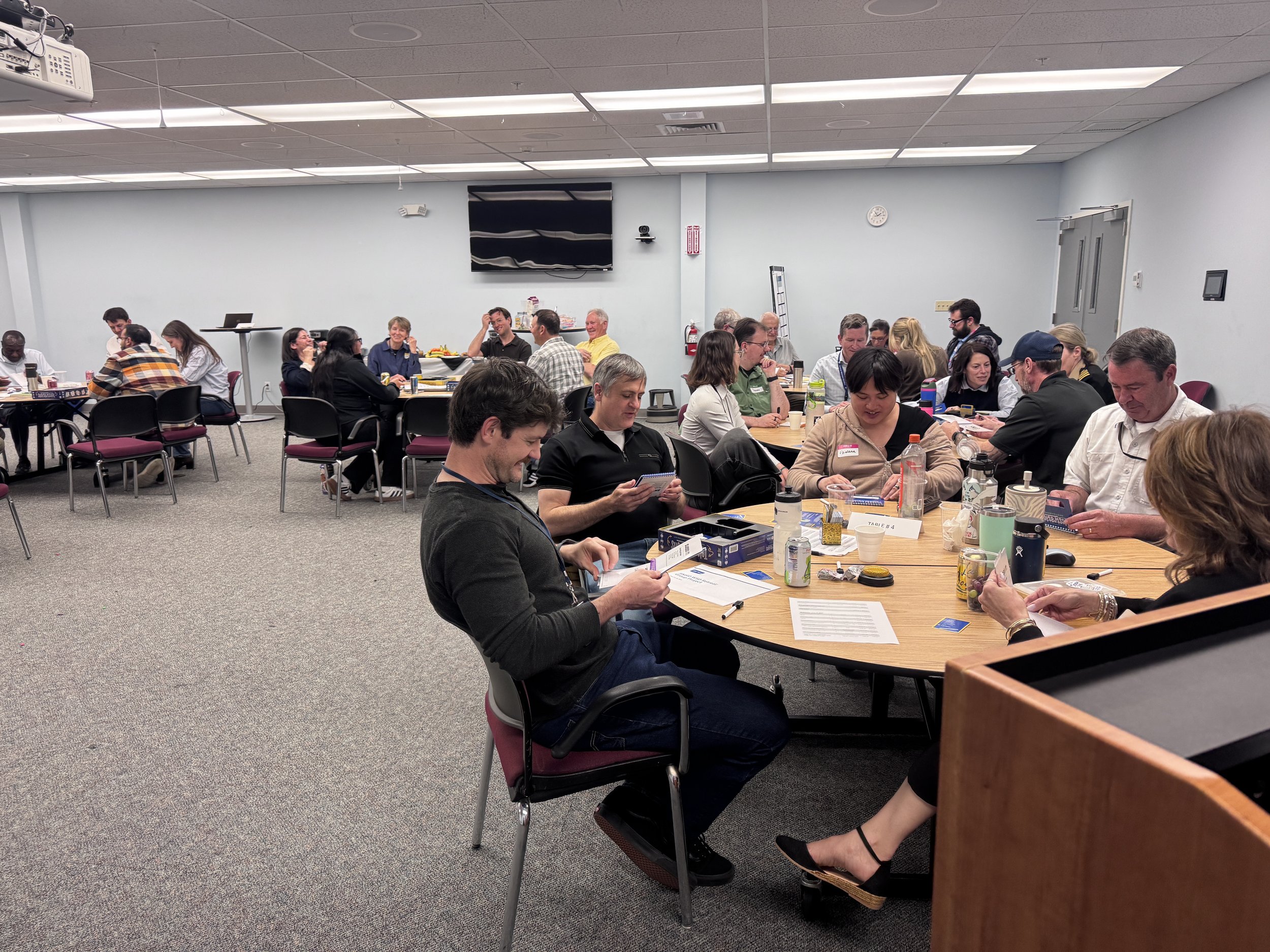
Instead of a heavy lecture or a dry corporate workbook, we broke the 40-person division into multiple gaming tables for an intensive, hilarious rounds of Telestrations (a visual, cooperative game of telephone).
Through rapid-fire rounds of sketching and guessing, the table game forced people to communicate under constraints, yielding immediate, insights for their day-to-day work. Through our QUEST debrief the team had several AHA! moments:
Clear Communication Is in the Eye of the Beholder: The team quickly realized that a message only becomes clear when the person receiving it understands it. Team members learned to check assumptions, clarify instructions, and communicate with greater intention.
Assume Good Intent: When drawings or messages changed dramatically as they moved across the table, players chose to laugh, adapt, and refocus instead of assigning blame. They practiced giving one another the benefit of the doubt and responding with curiosity and flexibility.
Build Collective Resilience: Even when one person misunderstood a prompt or made a mistake, the team rallied around them and worked together to keep moving forward. Players demonstrated that shared support and collaboration help teams overcome setbacks and achieve their goals.
Bridge Generational and Cultural Perspectives: The activity revealed how age, experiences, and cultural backgrounds shape the way people interpret the world. When one team member drew a “station wagon,” younger colleagues did not recognize the vehicle, creating a powerful discussion about how different generations assign different meanings to the same words and concepts.
“This was excellent. Exactly what we needed.”
- CDC Participant
RESULTS
We didn’t rewrite a complex organizational culture or erase years of systemic public health burnout in a single hour.
But what we did was give them a peek at what their culture can look like.
Egos and Titles Left at the Door: Around the game tables, the institutional hierarchy completely dissolved. Job titles, clearance levels, and senior rankings didn't matter—the most senior leaders and the newest staff members played on completely equal footing, removing the usual barriers that stifle open communication.
A Glimpse of the Baseline: By the end of the session, the room was filled with roaring laughter and organic conversation.
Humanizing the Network: Colleagues who had spent months trading emails were able to drop their guards, laugh at absurd constraints, and see each other fully as people.
A Counter-Narrative to Burnout: The session proved to a that friction doesn't have to define their daily experience, and that leadership was willing to invest in their culture.